Dear friends,
As the newly named director of the MIT Energy Initiative (MITEI), I am grateful to my predecessor Bob Armstrong, for the strong foundation of energy work he created; to Rob Stoner, MITEI’s interim director, for maintaining that momentum; to our researchers, faculty, and students who are passionately driven to advance the energy transition; and to MITEI’s members, who recognize the importance of this work and make it possible.
I took this role because I strongly believe we can stop climate change. MITEI has deep expertise in energy systems, technologies, resources, policy, and distribution. We understand the complexity of the energy transition. And we recognize the urgency with which it must happen. We are already making great strides transitioning from fossil fuels to cleaner sources of energy. Still, change is not happening fast enough. And success will only be measured in how much and how quickly we reduce greenhouse gas emissions.
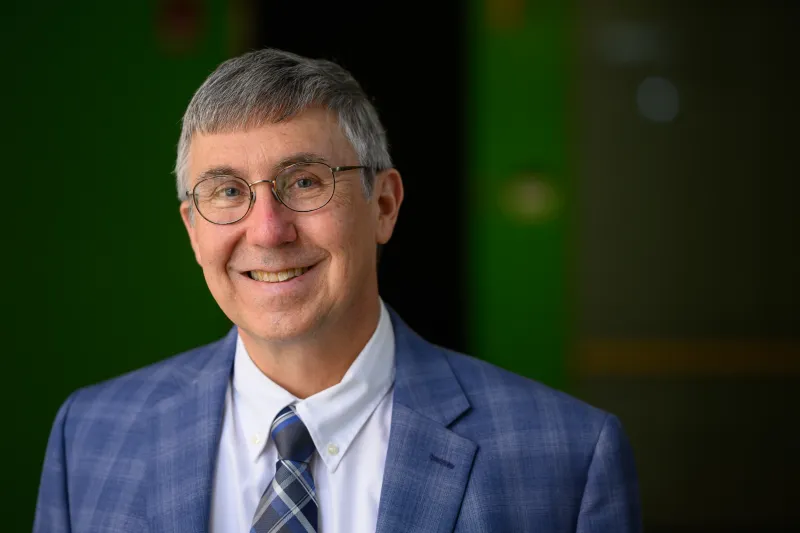
William H. Green
MIT President Sally Kornbluth has identified climate change as “the greatest scientific and societal challenge of this or any age,” and has called on the MIT community to meet that challenge. MITEI, with our understanding of the science, systems, economics, and business of energy, and our relationships across academia, industry, and government, is answering that call with renewed vigor and purpose.
In order to succeed, and succeed quickly, we must all work together: universities and start-ups for innovation, government for policy, big companies for massive scale. Today, new clean technologies have difficulty competing with well-established processes powered by cheap fossil fuels, and big companies are reluctant to make major investments unless government policy reduces the risk.
Last spring, MITEI demonstrated how we can work together by bringing together the stakeholders in the energy transition for our Spring Symposium to explore the possibilities and challenges of obtaining cheap, clean hydrogen from geologic sources. This symposium exemplified what I believe is our best chance at success in solving complex challenges—gathering experts from all sectors, clarifying what remains unknown, considering pros and cons, and building consensus around promising technologies and how to advance them quickly.
Yet, with so many stakeholders, and such complicated energy systems, this work takes time. I believe we can accelerate the process of moving climate solutions from laboratory to large-scale commercialization by bringing these stakeholders together even earlier to discuss, develop, and fund solutions. As I envision MITEI’s future, I am focused on convening researchers, economists, industry, non-profits, and government to reach consensus on practical approaches to decarbonize our entire global economy as quickly as possible. Consensus reduces risk, and so encourages the massive investments needed to stop climate change.
While we develop these necessary advances, I recognize that to solve the climate problem, the entire global economy needs to change. We must all come to the table to address the challenges of every sector. With support from business and government, MITEI is searching for real climate solutions that the public will adopt, and that merit the huge investments necessary for wide deployment. Still, we must work harder and faster to transition our energy systems. For, it is by working collaboratively, and urgently, to solve these complex issues that we will successfully address the greatest threat facing humanity today.
Sincerely,
William H. Green
Director, MIT Energy Initiative
Hoyt C. Hottel Professor of Chemical Engineering