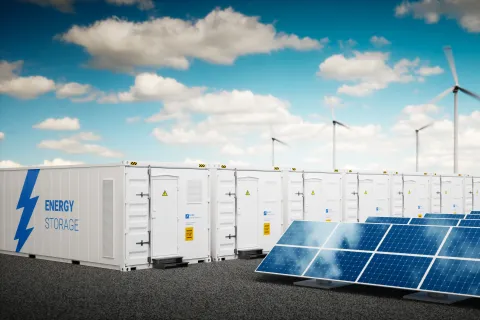
The convergence of renewable energy intermittency, rising cybersecurity threats, and severe weather risks demands more resilient grid infrastructure. Long-duration energy storage (LDES), which enables the storage of energy during periods of excess generation and its discharge when needed, can ensure grid stability during periods of low renewable output and enhance security and resilience against power disruptions and weather events. As LDES technologies mature, renewable generation combined with LDES may offer the most cost-effective pathway to zero-carbon firm power.
Despite the clear benefits and a wide range of identified approaches (thermal, mechanical, chemical, electrochemical, electrical), most LDES technologies remain pre-commercial. Therefore, significant research and analysis are essential to bridge the knowledge gap and to identify the most technically feasible, cost-effective, and logistically viable LDES solutions.
Approach
The Future Energy Systems Center currently has a special focus on long-duration energy storage to increase engagement between MIT researchers and MITEI members on this topic. This engagement is identifying the most important concerns and challenges related to long-duration energy storage and formulating special Center projects to address these issues. The engagement is also enabling sharing of information among members and across Center projects. The Center is planning quarterly webinars and an annual research brief on LDES.