Drip irrigation systems reduce water use and increase crop yields compared to flood irrigation, but they require costly energy for high- pressure pumping. Katherine Taylor of mechanical engineering is designing flexible tubes with controlled shapes and material properties that allow the system to operate at much lower pressures, reducing pumping power and energy consumption. With this technology, solar-powered drip irrigation could become an affordable option for smallholder farmers across the developing world.
Tata Center students seek innovative, affordable solutions to real-world problems in India
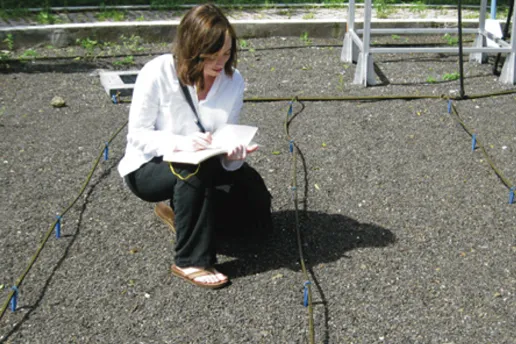
Natasha Wright, MIT
Tata Fellows met with companies, community members, and policy makers in India to identify projects for ongoing collaboration
In January 2014, 49 graduate students from the Tata Center for Technology and Design spent four weeks meeting with companies, community members, and policy makers in many parts of India. Their assignment: to identify a specific need or challenge; outline a technically, culturally, and economically viable solution; and team up with a local partner for ongoing collaboration. The Tata Fellows and their MIT faculty advisors are now undertaking projects focusing on energy, water, healthcare, agriculture, and housing. Four of the new energy-related projects are described below.
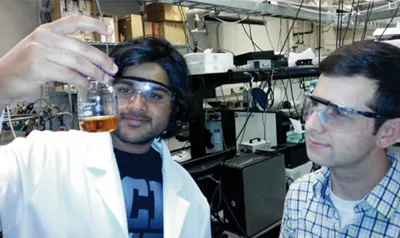
Priyank Kumar (left) and Dr. John McGann, both of materials science and engineering, are synthesizing solar thermal fuels that can provide low-cost, on-demand heat for cooking and other applications. They use specially designed molecules that change shape when exposed to sunlight, assuming a high-energy configuration until they are “jumpstarted” by a small jolt of heat or electricity. They then snap back to their original configuration, releasing heat in the process. Photo: Giuseppe Romano, MIT
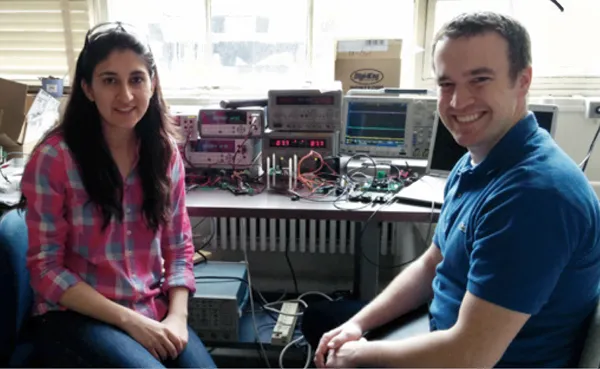
Wardah Inam of electrical engineering and computer science (left) and Daniel Strawser of mechanical engineering are developing uLink, a low-cost, highly scalable power conversion and routing device. The uLink units are used to interconnect households that have excess generating capacity with neighboring households that need it, thereby continuously matching supply with demand. This reduces the need for battery storage and lowers the cost of power for everyone. Photo: Courtesy of the researchers
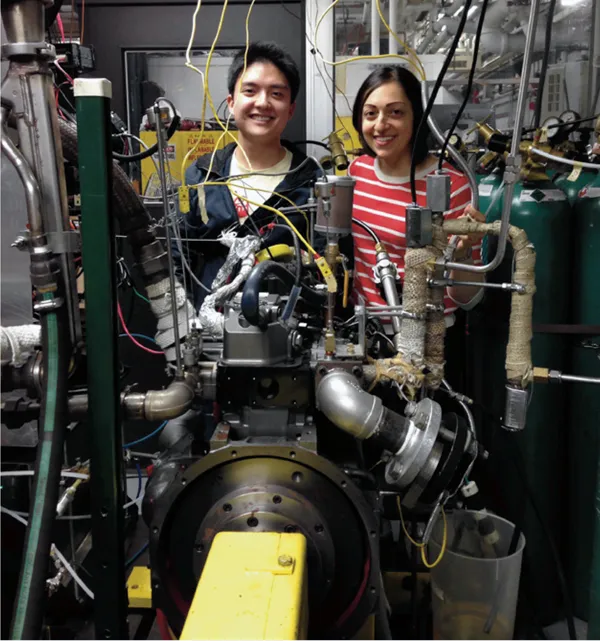
Emmanuel Lim of mechanical engineering (left) and Angela Acocella of engineering systems are developing a small-scale, low-cost process for converting methane gas from organic waste into clean-burning liquid fuels such as dimethyl ether for cooking and heating. Here, they pose with their experimental setup—a conventional internal combustion engine adapted to compress and oxidize methane, producing hydrogen-rich gas, which is later synthesized to liquids. Photo: Courtesy of the researchers

