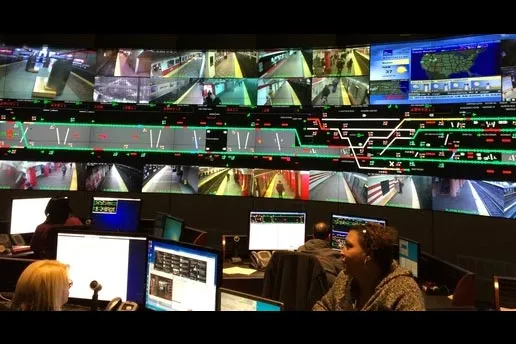
Those on the Energy Underground: MassDOT and MBTA Facilities and Tunnel Tour were given a first-hand look at what goes on in the MBTA Operations Control Center, shown above. Screens paneling the room monitor everything from weather to in-station security cameras and the status of trains traveling the tracks. Participants learned how America’s oldest subway system operates on a daily basis, as well as how it handles weather emergencies—a particularly timely topic this winter.
MITEI sponsors energy-related tours, events during IAP 2015
Dylan Ayers, MITEI
Every January, MIT students, faculty, and staff take part in the Institute’s Independent Activities Period (IAP), when they are invited to step outside their comfort zones, dabble in unfamiliar areas, and encounter a richer view of the world. In 2015, members of the community could fill their days and nights with new experiences ranging from touring a nuclear fusion reactor, to using Fermat’s rule to analyze election results, to trying a (very steady) hand at the art of the Japanese Tea Ceremony.
Each year, the MIT Energy Initiative (MITEI) sponsors a number of energy IAP events and helps publicize other energy-related activities organized by faculty and students across campus. This year, MITEI’s offerings included tours of the Kendall Cogeneration Station, the Massachusetts Department of Transportation Highway Operations Center, the MBTA Operations Control Center, the Aramco Research Center, the LEED Platinum Artists for Humanity building, and the Massachusetts Clean Energy Center’s Wind Technology Testing Center. MITEI also offered information sessions for undergraduate students interested in learning more about energy-related undergraduate research opportunities (UROPs) and MIT’s Energy Studies Minor.
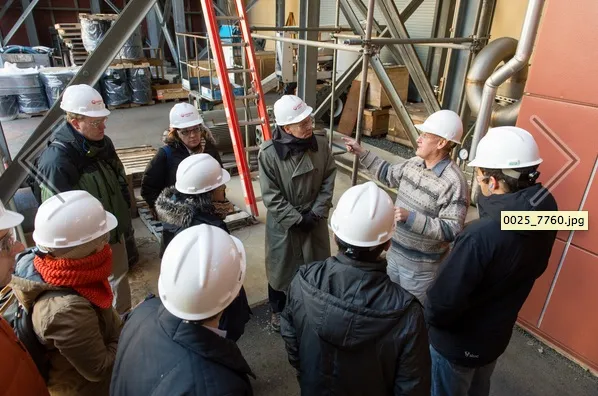
During IAP, MITEI organized a group tour of Veolia Energy North America's Cogeneration Station in Kendall Square, Cambridge. The facility generates electricity to power the region’s electrical grid and provides steam heat to Veolia's 220 customers throughout Boston and Cambridge. Within the plant, natural gas is burned in an electricity-generating combustion turbine. Heat remaining in the exhaust gas is used in a heat-recovery steam generator to produce high-pressure steam. Some of this steam is exported, while the rest runs a steam-driven electric power generator. A recent reconfiguration of the facility, including a 7,000-foot steam pipeline extension, is estimated to reduce greenhouse gas emissions by approximately 475,000 tons per year. Giving the tour at the far right of the photo is Veolia's Director of Network and Distribution George Hengerle. Photo: Justin Knight
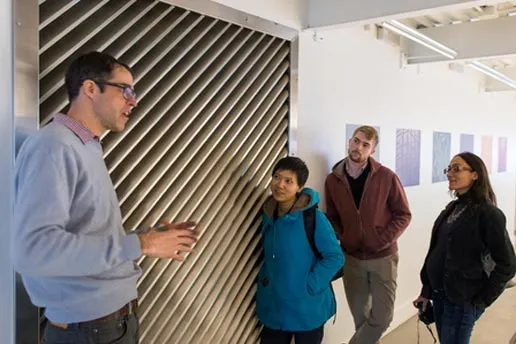
From left: During a tour, Andrew Motta, operations director for Artists for Humanity, describes highlights of the group's LEED Platinum-certified studios to MIT graduate student Yuqi Wang, Dylan Ayers of MITEI, and MIT postdoctoral fellow Ornella Iuorio. Behind Motta is a vent that provides cool air to the building. To save energy, Artists for Humanity's studios were built without air conditioning. Instead, fans situated on the building's roof blow air down a shaft and into this vent at night, when the outdoor air is coolest. As a result, the building starts each day cooled to a comfortable temperature, with no need for the constant energy expenditure of air conditioners.

