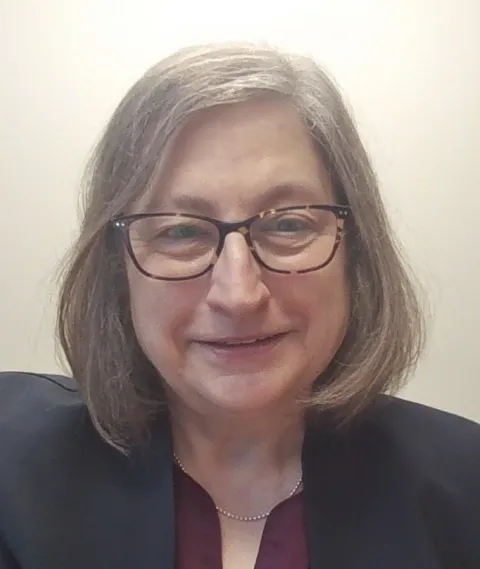
Carolyn Ruppel returned to MIT to join the MIT Energy Initiative (MITEI) as deputy director in early 2025, following a decades-long career as a professor and federal research scientist. Ruppel spent nearly 19 years at the U.S. Geological Survey (USGS) and by 2025 was Acting Senior Science Advisor to the USGS Chief Scientist and a ST-rank research geophysicist leading the Department of Energy-supported USGS Gas Hydrates Project. In 2011, she wrote the gas hydrate appendix for MITEI’s Future of Natural Gas study. Over several decades, Ruppel led research expeditions in the Atlantic, Pacific, and Arctic Oceans and on the Alaska North Slope and Southeastern U.S. barrier islands. She dove on the Alvin submersible, led explorations with remotely-operated vehicles, participated in ocean drilling, conducted high-resolution marine seismic programs and borehole temperature measurements through gas hydrates, and co-discovered widespread seafloor methane emissions on the U.S. Atlantic margin. Her publications have focused on the dynamics of gas hydrate reservoirs, pore- to field-scale properties of hydrate-bearing sediments, potential synergies between global warming and gas hydrate breakdown, subsea permafrost degradation, and active marine acoustics and federal environmental policy. Ruppel holds SB, SM, and PhD degrees from MIT and was a postdoctoral scholar at Woods Hole Oceanographic Institution. From 1994 to 2006, Ruppel was a geophysics professor at Georgia Tech and also served as a National Science Foundation program manager for nearly three years. She is a Fellow of the Geological Society of America, a past Distinguished Lecturer for the Ocean Drilling Program, and a 2024 recipient of the U.S. Department of Interior’s Distinguished Service Award, the department’s highest honor.

